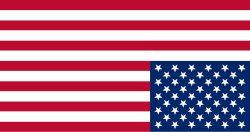
Washington, We Have A Problem
July 03
2017
Summary:
The episode uses Apollo 13’s gyroscopes and the danger of “gimbal lock” as a metaphor for how America’s checks and balances can fail when the executive, legislative, and judicial branches move in partisan lockstep under Donald Trump, with examples including attacks on the courts, the travel ban, and congressional responses to the Russia investigation and Comey’s firing. Through conversations with Yasha Monk and David Eaves, it explores whether U.S. democracy is truly self-correcting like a constitutional “gyroscope,” how the media as a potential “fourth gimbal” has weakened amid polarization and misinformation, and how many institutional vulnerabilities predate Trump. The takeaway is that constitutions and institutions can’t stabilize themselves without broad public commitment to democratic norms, making civic values and cross-partisan accountability central to whether the system holds.
00:00
Wade Roush
Before we start the show, just a quick heads up that there's a tiny bit of adult language in this episode.
00:05
So, if you have any younger ears nearby, you may want to listen when they're not around.
00:18
I'm Wade Roush, and this is Soonish, the Politics Edition.
00:26
At the top of the podcast, I always say that Soonish is a show about the future, how we think about it, what we can do to shape it, and why our best forecasts and our worst fears are usually wrong.
00:39
But sometimes our worst fears aren't wrong.
00:45
Walter Isaacson
Hey, we've got a problem here.
00:49
What did you do?
00:50
Nothing.
00:50
I stirred the tanks.
00:51
Wade Roush
This is Houston.
00:53
Say again, please.
00:54
Houston, we have a problem.
00:55
That's Tom Hanks, playing astronaut Jim Lovell in a scene from one of my favorite movies of all time, Apollo 13.
01:02
It's a pretty faithful reenactment of the moment from the real Apollo 13 mission in 1970 when an oxygen tank exploded and blew the side off the command module.
01:12
The explosion didn't harm the crew, so it wasn't a complete worst-case scenario.
01:17
But it nearly disabled the ship.
01:19
Within minutes, Lovell and his crew knew that there was no way they'd be able to land on the moon.
01:24
In fact, it wasn't even clear how they were going to survive long enough to get home.
01:29
That's a lot of disappointment and dread to deal with, even for guys as tough and stoic as the Apollo astronauts.
01:36
And I've been feeling a little bit of that myself lately.
01:39
I was part of the popular majority who voted for Hillary Clinton in 2016.
01:44
And if you were too, then you might share this sense I have that we've been struck by an unexpected explosion that's now sending the whole country madly off course.
01:53
And that explosion is named Donald Trump.
01:59
When I decided last summer to make a podcast about the future, I couldn't imagine that there would be a President Trump in that future.
02:06
But I was so wrong.
02:08
And now it's impossible to talk honestly about America and its future without accounting for Trump and his movement.
02:14
Say, for instance, that you were already concerned about global warming and what we can do to slow it down.
02:19
Now you have to be even more concerned, since Trump's efforts to gut the EPA and kill the Clean Power Plan and exit the Paris Agreement will make it that much harder for the world to get carbon emissions under control.
02:32
Now, a lot of people have been trying to use history to understand Trump.
02:36
He often gets compared to authoritarian populists of the past, like Mussolini or Hitler or Huey Long.
02:42
But I'm less interested in Trump the man and more interested in Trump the never-ending explosion.
02:48
The Electoral College gave us an authoritarian president who doesn't know and doesn't seem to care about our system of checks and balances and political norms.
02:57
It's not clear to me how we'll come out the other side of this, or whether our Constitution is even set up to deal with this kind of challenge.
03:05
In today's episode, I want to investigate that question using a comparison of my own.
03:10
And because I'm a big nerd, that comparison comes from technology, and specifically from space travel.
03:17
That's a field where engineers have worked really hard to come up with systems that are self-correcting.
03:22
But these systems don't always work.
03:24
And when they fail, they tend to fail in really interesting ways.
03:28
So stick with me for a few minutes.
03:30
It'll be fun, I promise.
03:38
To start, I've got to tell you a little story about Albert Einstein and one of his biographers, the journalist Walter Isaacson.
03:45
Isaacson had access to Einstein's family papers, and in his 2007 biography of Einstein, he talked about a letter that Einstein had written to his son, Hans Albert, in late 1954.
03:55
This was just after the downfall of Senator Joseph McCarthy.
04:02
For years, McCarthy had been using his skills as a demagogue to manufacture a wave of anti-communist paranoia.
04:08
But in 1954, his fellow senators voted to censor him for abuse of power.
04:14
And that, plus a series of excoriating news stories by TV anchor Edward R. Murrow, finally turned public opinion against him.
04:21
Edward R. Murrow
The actions of the junior senator from Wisconsin have caused alarm and dismay amongst our allies abroad and given considerable comfort to our enemies.
04:30
And whose fault is that?
04:32
Not really his.
04:34
He didn't create this situation of fear.
04:36
He merely exploited it.
04:37
and rather successfully.
04:40
Cassius was right.
04:41
The fault, dear Brutus, is not in our stars, but in ourselves.
04:48
Wade Roush
Einstein wrote to his son that no matter how strange politics gets in America, quote, somehow they managed to return to normality.
04:55
Everything, even lunacy, is mass-produced here.
04:58
But everything goes out of fashion very quickly, unquote.
05:03
What was really interesting to me about this letter was the way Isaacson framed it in the biography.
05:08
Isaacson wrote that Einstein had, quote, finally discovered what was fundamental about America.
05:14
It can be swept by waves of what may seem to outsiders to be dangerous political passions, but are instead passing sentiments that are absorbed by its democracy and righted by its constitutional gyroscope, unquote.
05:27
I love that gyroscope metaphor.
05:30
And apparently Isaacson really likes it too, because he uses it a lot in his public remarks.
05:35
Here's Isakson talking to anchorman Bob Schieffer on CBS This Morning in 2013.
05:40
Walter Isaacson
You know, there's a wonderful story about Einstein.
05:42
And he's watching in the early 1950s when America's gone through McCarthyism.
05:47
And he writes his son and says, I've seen this happen before.
05:50
It's like Nazi Germany.
05:51
It's like the communists.
05:53
This country's going to go off of a cliff.
05:55
And then things write themselves.
05:57
Eisenhower comes in.
05:58
McCarthy gets Edward R. Murrow.
06:00
You know, your great mentor comes in and knocks off.
06:04
And he writes another letter to his son.
06:06
There's something amazing about America's democracy.
06:08
It's got a gyroscope.
06:10
And just when you think it's going to go off the cliff, it writes itself.
06:12
This is what we're seeing now.
06:15
Wade Roush
That's a total paraphrase of the letter.
06:17
And as far as I can tell, the actual metaphor about the constitutional gyroscope is Isaacson's, not Einstein's.
06:23
But either way, it's fun.
06:25
But that doesn't mean it's an accurate metaphor.
06:28
Saying democracy is like a gyroscope that writes itself may have been a good way to describe the return to normality after McCarthy.
06:35
But whether it still holds today, well, that's the essence of my question about Donald Trump.
06:40
I want to take the gyroscope metaphor and put a different spin on it.
06:44
Pun intended.
06:46
The very first time I heard Isaacson talking about the constitutional gyroscope, my mind went right back to Apollo 13.
06:52
Walter Isaacson
The dialogue in the movie version of Apollo 13 is pretty faithful to the actual mission transcripts.
07:12
Wade Roush
And as the astronauts are trying to get control of the ship, you can hear that they keep fretting about gimbals and something called gimbal lock.
07:21
It turns out they're talking about the navigational system on board the Apollo module.
07:26
It's a machine called the Inertial Measurement Unit, or IMU, and it was designed to supply the Apollo guidance computer with a consistent reference point as the ship traveled from the Earth to the moon.
07:36
At the center of the IMU, there was a little cube, six inches on each side, with three gyroscopes inside it.
07:43
The thing about a gyroscope is that once you set it spinning, its angular momentum tends to keep it in the same orientation, just like a child's toy top.
07:51
So, on Apollo, you could start the IMU gyroscopes spinning before launch, and they'd stay in absolutely the same orientation, all the way to the moon, as long as they were mounted properly so that the ship could basically rotate around them.
08:04
Amy Teitel
The IMU was kept stable on its own orientation point by using gimbals, which is basically a series of rings pivoting at right angles to each other to move independently of the spacecraft.
08:16
Wade Roush
That's Amy Teitel.
08:18
She's super smart about the history and the technology of the Apollo program.
08:21
And she also has a crazy popular YouTube channel called Vintage Space, where she explains all this stuff for non-experts.
08:29
Gimbals are a little hard to visualize, but you can check out an animation on our website at soonishpodcast.org.
08:35
And if you ever saw the movie Contact, you might remember the huge alien machine that sent Jodie Foster through a wormhole in space.
08:42
Soundbite
We are at 30%.
08:43
Copy that, 30%.
08:47
Wade Roush
That machine was just a giant set of circular gimbals,
08:51
Now, once you understand that gimbals are these nested rings mounted at 90-degree angles to each other, you can start to see why it's so important that the gimbals in the navigation system be able to rotate independently of each other.
09:03
And what happens if they can't?
09:05
The problem hits when the inner gimbal lines up with the outer gimbal.
09:09
Under that condition, the gyroscope can still be kept isolated from maneuvers in two directions, but not for maneuvers in the third direction.
09:16
But Amy can explain better than I can.
09:18
Amy Teitel
So to understand gimbal lock, you kind of have to take a bit of a step back and just understand the three axes of control in a spacecraft, which are the same axes of control in an aircraft, the axes of pitch, yaw, and roll.
09:31
So the IMU is using these three gimbals that are set at right angles to each other, one against the axis of pitch, one against the axis of yaw, and one against the axis of roll.
09:42
So gimbal lock is this
09:44
just absolutely terrifying and deadly but you know not instant death like slow demise of being lost in space style death of when the two the outer and the inner gimbal align so once you have that alignment of the gimbals the IMU can't find its own orientation again
10:03
And you can try to pivot around all you want, but once those two gimbals are locked onto each other, there's no separating them and there's no way to figure out exactly where your orientation is to then navigate your way in space to then make it home alive.
10:16
Wade Roush
Amy says that the way the Apollo navigation system was designed, the pilot simply was not allowed to put the ship in certain orientations relative to the gyroscopes, because that would bring the IMU too close to gimbal lock.
10:27
Amy Teitel
So it wasn't just the gimbal lock was a worry in the case of Apollo 13 when the spacecraft is venting oxygen and that's
10:33
kicking it around on around all of its axes and kind of putting you at risk or putting the crew at risk of hitting gimbal lock.
10:39
Crews were also told not to point the spacecraft at certain orientations because that would put you within the scary limits of hitting gimbal lock.
10:48
Wade Roush
Now, even back in the 1960s, there was a well-known way to prevent gimbal lock.
10:52
And that was to add a fourth gimbal to the system as a backup and to help keep the other three from lining up.
10:58
Amy Teitel
Yes.
10:58
I forget which astronaut said it, but the joke was, all I want for Christmas is a fourth gimbal.
11:04
The idea with a fourth gimbal, you lose one, you still have a backup.
11:07
But then you're dealing with four axes, sort of, and that starts to make navigation when you're going to the moon a little bit more complicated.
11:14
On Apollo, it might have just been more trouble than it was worth.
11:16
Also added a lot of weight, and weight was an absolute premium to get Apollo off the ground at all and on time.
11:24
Wade Roush
The astronaut who joked about getting a fourth gimbal for Christmas was Michael Collins, the command module pilot on Apollo 11.
11:31
Here's a tape of that conversation.
11:50
So why have I taken you on this long detour into the history of spaceflight?
11:53
Well, it's because the gyroscope metaphor that Isaacson extracted from that Einstein letter is useful, but incomplete.
12:01
And I think the metaphor gets more interesting if you bring it up to date.
12:07
Soundbite
Now, stick with me, because this is the main idea.
12:18
Wade Roush
You can think of the U.S. Constitution as a gyroscope that's nested inside three gimbals.
12:23
But instead of gimbals for yaw, pitch, and roll, our system has gimbals for the executive branch, the legislative branch, and the judicial branch.
12:32
In normal times, the system of checks and balances set up by the Constitution ensures that the three gimbals of government rotate separately.
12:39
For instance, the president can veto bills sent to him or her by Congress.
12:44
but Congress has the power to override the veto and even impeach the president.
12:48
The president appoints Supreme Court justices, but the Senate has to confirm them.
12:53
The judiciary can convict people, but the president can pardon them.
12:57
And so on.
12:58
Now, here's where the gimbal metaphor gets really fun.
13:02
What happens when two or more of our branches of government start to move in lockstep?
13:06
What if one political party controls Congress and the White House and the same party is just one justice away from having an ideological majority on the Supreme Court?
13:15
What if we have an authoritarian president who's swept into office on a wave of populist anger and the opposition party is in total disarray and there's nobody in power who wants to stand up to him?
13:26
Under those conditions,
13:27
Our whole political system approaches what you might think of as gimbal lock.
13:33
When gimbal lock happens on an airplane, you crash and burn.
13:37
When it happens on a rocket, you're lost in space forever.
13:41
And in a way, that may be the danger we're facing right now because of Trump.
13:47
Here's the kind of thing I'm talking about.
13:49
Back in February, a federal judge in Washington state named James Robart blocked enforcement of President Trump's travel ban targeting citizens of majority Muslim countries.
13:59
Trump went on the attack in a series of tweets where he labeled Robart a, quote, so-called judge and tried to blame him preemptively for future terrorist attacks.
14:08
That set off loud alarm bells for legal scholars who saw it as an attempt to undermine judicial independence and frame any and all dissent as illegitimate.
14:17
But even as Trump has tried to overstep his bounds, Congress has been understepping theirs.
14:23
Ever since the inauguration, evidence has been piling up that Russia interfered in the 2016 elections and that the Trump campaign was in constant communication with Russian officials.
14:36
But for months, Republicans in Congress seemed to want to dismiss the whole matter.
14:41
It wasn't until after Trump fired FBI Director James Comey for refusing to end the Bureau's Russia probe that Congress seemed to rediscover its own powers of investigation.
14:51
Comey's resulting testimony revealed, among many other things, that Trump has the strange idea that the FBI director's loyalty should be to the president.
15:00
Mark Warner
Despite you explaining your independence, he kept coming back to you, I need loyalty, I expect loyalty.
15:06
Had you ever had any of those kind of requests before from anyone else you'd work for in the government?
15:11
James Comey
No.
15:12
And what made me uneasy was I'm, at that point, the director of the FBI.
15:16
The reason that Congress created a 10-year term is so that the director is not feeling as if they're serving with political loyalty owed to any particular person.
15:27
The Statue of Justice has a blindfold on because you're not supposed to be peeking out to see whether your patron is pleased or not with what you're doing.
15:34
Wade Roush
That's Democratic Senator Mark Warner questioning former Director Comey before the Senate Intelligence Committee on June 8th.
15:41
And it's frightening stuff for anyone who's worried that the checks and balances aren't checking and balancing.
15:47
But the idea that our government might be stuck in something like gimbal lock is still just a hypothesis.
15:53
To start trying it out, I went in search of people who know more than I do about government and political science.
15:59
Yasha Monk
I'm Yasha Monk.
16:00
I have been worrying for a number of years about the ways in which
16:05
Liberal democracy, I think, is much more fragile than people tend to think.
16:09
Wade Roush
Yasha Monk is a lecturer on government at Harvard University, a columnist at Slate, and a fellow at the nonpartisan think tank New America.
16:17
He also has a wonderful podcast about politics called The Good Fight.
16:21
And he was kind enough to help me take the Gimbalock metaphor and put it through its paces.
16:25
Yasha Monk
Yeah, that's a really interesting idea.
16:27
I mean, it's a self-correcting system.
16:29
And there's something to that.
16:31
I fear, though, that the system may be less self-correcting than we think.
16:36
So one way of thinking about that is the gimbals moving in the same direction.
16:41
But that's just another way of saying that the different branches of government don't correct each other because they're all consumed by the same anger and the same passion or because one person has become so dominant that Congress just keeps doing what that person wants.
17:00
Wade Roush
Muck told me he'd really like to believe that constitutional democracy is self-correcting, like a gyroscope.
17:06
But even a gyroscope can fail, which is the whole point of the gimbal lock idea.
17:10
Yasha Monk
This goes back to the gyroscope and the way in which some of the different gimbals are moving in unison, rather independently of each other, that a lot of Congress has done abysmally.
17:24
That when questioning James Comey,
17:27
A lot of Republicans are more interested in protecting Donald Trump and casting blame on Hillary Clinton and essentially exonerating Trump, no matter what Comey might have to say, than in trying to find out the truth.
17:42
That up till now, Republicans by and large have been voting with
17:46
of Trump agenda in Congress, because they seem to prioritize getting a tax cut through or reforming Obamacare over safeguarding some of the basic aspects of our institutions and constitution.
17:59
My fear is that rather than being a self-stabilizing system, it's a bunch of dominoes.
18:07
Well, once you throw one over, all the other ones fall as well.
18:11
Wade Roush
Gyroscopes, gimbals, dominoes.
18:14
I figure if you're going to get metaphorical about government in the US, you might as well go all the way.
18:19
And it's occurred to me that American democracy has a fourth gimbal that usually serves as an emergency backup to keep the other three from locking up.
18:27
And that's the media.
18:29
The classic example of the fourth gimbal in operation would be the drumbeat of coverage of the Watergate scandal from 1972 to 1974 by newspapers like The Washington Post and The New York Times.
18:40
Those stories helped fuel the congressional investigations that eventually forced Richard Nixon from office.
18:46
But the question is whether the fourth gimbal, also known as the fourth estate, is still functioning the way it used to.
18:52
Yasha Monk
The press has done excellently reporting around
18:55
the firing of James Comey, around the various links that the Trump administration has with Russia.
19:05
Where I'm less sure is that the press is still able to come to a consensus.
19:12
And you see that when you look at Fox News, which has sometimes criticized Trump a little bit, but in the end now sees itself as, you know, the main organ of the defense of Donald Trump.
19:21
Perhaps I'm trying to think of how to make this metaphor work, but I mean, what happens if you have a sort of weird flabby fourth gimbal where half of it does one thing and half of it does another thing?
19:31
Wade Roush
I don't know.
19:32
Well, I think another thing that I fear makes the fourth gimbal flabby or non-functional is the persistent attack on reality, the nature of reality, and just the extreme skill of Trump and his minions at bullshitting.
19:46
Yasha Monk
Yeah, and so this is actually one way of thinking about this.
19:49
I mean, from the beginning, I think a lot of people who had lived in countries where authoritarian populists had taken over, like Russia or Venezuela, were really worried about the ability of the Trump administration to spread fake news and alternative facts and all of those lovely names we have for us now, but essentially to spread lies from the White House.
20:08
But the thing that...
20:11
You know, I hadn't quite expected as a way in which other people would echo because whatever White House comes up with Breitbart and Drudge and so on immediately echo and amplify.
20:20
And so that's a lot of parts of the system moving in the same direction.
20:25
As soon as Trump tweets some lie or some piece of bullshit.
20:30
And that is pretty concerning.
20:33
Wade Roush
Now, I think one of the reasons Yasha Monk liked the Gimbalock idea is that it fits pretty well with his own thesis that the world's constitutional democracies may not be as robust as we'd like to think.
20:45
But I did talk to a different expert who had some bones to pick with my metaphor.
20:49
I'll tell you more about him right after this break.
20:54
Soonish is brought to you in part by Kent Rasmussen Winery of California.
20:58
Rasmussen has been famous since 1986 for their purely poetic Pinot Noir, grown in the cool mists of the Carneros region of Napa Valley.
21:07
And under the companion Ramsey label, they offer superior quality North Coast Pinot Noir, Merlot, Petit Syrah, Cabernet Sauvignon, and Chardonnay at a wonderful price.
21:18
I'm a longtime fan of these finely made wines, and they're still the only wines you'll find on my wine rack.
21:23
So take a bottle of Rasmussen or Ramsey to your next dinner party, and you'll be sure to impress.
21:29
For more information, visit KentRasmussenWinery.com.
21:36
Soonish is also supported by listeners.
21:38
And here's the deal.
21:40
I make the show totally on my own.
21:42
I have advertisers like the awesome Kent Rasmussen Winery, but mostly I pay for the show out of pocket.
21:48
And those pockets aren't deep.
21:50
To keep the show going, I'm going to need you, my listeners, to think of yourselves like subscribers.
21:56
And if you're willing to donate as little as $1 per episode, now there's a super easy way to do that at patreon.com slash soonish.
22:05
A huge thank you to everyone who's already become a Patreon patron, including You can join these fine folks and face the future feeling more informed by going to patreon.com slash soonish and pledging what you can.
22:26
Thanks.
22:28
Finally, I've got some exciting news.
22:30
I've also been working on a second podcast with my former colleagues at Xconomy, the online source for news about startups and innovation.
22:39
It's called Xconomy Voices and it's an interview show where I talk with founders and CEOs and investors about their ideas and how they hope their companies will change the world.
22:49
You can check out Xconomy Voices at xconomy.com and you can subscribe at Apple Podcasts.
22:56
And now, back to the show.
23:00
The idea that our government is like a gyroscope that's approaching gimbal lock is only a metaphor.
23:05
I went into this story thinking it might turn out to be a load of hooey.
23:09
And as I was saying before the break, I eventually met a researcher named David Eaves, who tried to get me to be a little more rigorous about the idea.
23:17
David Eaves
So you have a hypothesis, which is that there's risk that the government will kind of end up in Gimbel Lock.
23:24
So I would want to actually look for evidence that would counter that.
23:27
Wade Roush
Eves is a lecturer at the Kennedy School of Government at Harvard University, and he's particularly interested in technology and government.
23:34
David Eaves
Everything from how we deliver services, how we're gathering and collecting and thinking about data to deliver services or, frankly, to monitor and surveil people, to even the use of technology to engage in public discourse differently.
23:49
Wade Roush
When I talked with Eves, I started off with the same proposition that our national gyroscope is broken and that Donald Trump is pushing us toward a constitutional crisis.
23:57
And he came back with at least three different arguments against that idea.
24:01
The first one was that if there's a real problem, it probably started before Trump.
24:08
David Eaves
Okay, well, can we look at all the things that happened in the Obama administration that would actually cause you to be fearful that actually Gimbal Lock was already occurring?
24:20
I think there are lots of journalists and lots of academics who are very worried about the surveillance apparatus that was built up under Obama and the lack of checks that seem to exist on that.
24:32
And now people are kind of more alarmed, if you will, under Trump, but not because he is necessarily reaching for more power.
24:38
He's reaching for the same power that the previous president had.
24:43
Maybe he'll reach for more, but at the moment he has the same.
24:45
But I think because his demeanor, some people are suddenly more concerned or saying, oh my gosh, the system is no longer has checks and balances.
24:52
Know that the system maybe didn't have checks and balances before.
24:55
Now you're suddenly worried because it's a president that you are less comfortable with.
24:59
Wade Roush
The second possibility Eves brought up was that, yeah, there are gimbals and they're working exactly the way they're supposed to.
25:05
David Eaves
The flip side of this too is I would also, what is all the evidence that would show that actually the president is constrained?
25:12
And I think there's a whole range of evidence that would show recently that the president did not engage in a set of angry tweets when the Koreans launched their test missile.
25:20
The president has somewhat had to step back from the immigration ban and the reworking of that seems like it's going to be much more constrained possibly than it previously was.
25:29
So in some ways you could argue actually there's very strong pressure that's forcing the president to engage in behaviors that are constrained by maybe structural systems or the other branches of government.
25:42
Wade Roush
And the third thing Yves thought I should consider is the possibility that I'm just being a sore loser.
25:48
In other words, if I were a Trump voter, I probably wouldn't be prattling on about stuff like constitutional gyroscopes.
25:54
David Eaves
I see things that I feel are not consistent with the Constitution happening under all presidencies.
25:59
The fervor with which people feel about those things tends to line up with party line, not with belief in the Constitution.
26:07
So Democrats are somewhat more forgiving of
26:12
surveillance overreach in my mind under Obama and then become very concerned about it under a Republican administration.
26:18
Republicans have their own issues on which they become more passionate about under Democratic presidencies and vice versa.
26:25
What I want to figure out is can you separate from the things that you personally care about?
26:29
Can you look for the things that feel consistently problematic?
26:32
And then would you say, yes, wow, these things that I find consistently problematic represent a systemic threat to the kind of order of government that we have.
26:42
Wade Roush
All three of Eve's cautions are really important, and on one point at least, I totally give in.
26:48
If you're a lefty like me, then naturally you're liable to see Trump's rise as a glitch in the system.
26:55
But if you believe in Trump's promise to make America great again, you're probably glad to see him shaking things up.
27:00
Political norms be damned.
27:03
Recognizing that we bring our own values to the table doesn't mean we need to forget or suspend those values.
27:08
But it probably does mean that Trump opponents like me will have to figure out better ways to communicate with Trump supporters.
27:17
To get through the Trump years and prevent our worst fears from coming true, it's going to be important to get everyone, left and right, to care more about the Constitution.
27:26
To explain why, Munk goes back to the ideas of classical political philosophers like Immanuel Kant and Niccolò Machiavelli.
27:34
Yasha Monk
Somebody like Immanuel Kant thought that the right design, the right constitution, the right setup can save you.
27:41
The way he put it is that even a race of devils can govern itself successfully if you set up the right constitution.
27:49
And then there was people like Nicola Machiavelli who always thought that no, in order to sustain a self-governing republic, you actually need broad consensus among the population that they care about this political system.
28:02
And personally, I think that Machiavelli was more right here than Kant was.
28:09
But when you look at, you know, the democratic constitutions we've set up over the last 25 years in
28:17
Afghanistan and Iraq and Hungary and Turkey.
28:22
The problem is not that those were stupid constitutions.
28:25
They were written by some of the best political scientists and experts of the region and so on.
28:30
They were smart constitutions.
28:32
The problem was that people in those countries didn't have the necessary democratic values.
28:38
You know, a constitution can't defend itself.
28:43
Wade Roush
At the end of the day, technology metaphors like the gyroscope can only take us so far.
28:48
A democracy isn't a machine.
28:51
And when it's under strain, there aren't easy technical fixes like adding more gimbals.
28:55
The Constitution is really nothing more than a story we tell each other about why we're a country, and how we should manage our mutual obligations, and how to do things together that none of us can accomplish alone.
29:07
We can always rewrite that story.
29:09
But if we stop believing in it, then we have a problem.
29:28
Soonish is written and produced by me, Wade Roush.
29:32
The show's theme is by Graham Gordon Ramsay.
29:34
Additional music this week by Tim Beek and Lee Rosevear.
29:38
You can find and follow the show on Apple Podcasts, Google Play Music, Stitcher, TuneIn, Radio Public, Overcast, or wherever you get your podcasts.
29:48
You can follow and like the show on Facebook, and I tweet about the show at Soonish Podcast.
29:53
Soonish is a proud member at the PRX Podcast Garage, a community recording studio and workspace in Austin, Massachusetts.
30:00
For more information, go to podcastgarage.org.
30:04
If you like the show, please rate and review us on Apple Podcasts.
30:08
When you do, it really does help other smart listeners like you find the show.
30:12
If you've never written a podcast review, that's okay.
30:15
I've posted step-by-step instructions in the extras section on our website at soonishpodcast.org.
30:21
At the website, you'll also find more information about all the people and ideas in this episode, as well as the music playlist and a page where you can sign up for our free email newsletter, Signals from Soonish.
30:33
You'll also find a link to a fantastic video about Gimbal Lock that Amy Teitel made a couple of years ago for her video blog, Vintage Space.
30:40
And there's a link to Yasha Monk's awesome podcast about politics, The Good Fight.
30:45
Thank you to Amy and Yasha and David Eves.
30:48
Thanks as well to Lauren Bacon, David Mendel, Daniel Sheehan, and Mark Pulaski.
30:54
And special thanks to our sponsor, Kent Rasmussen Winery and their purely poetic Pinot Noir.
30:59
And thank you for listening.
31:01
I'll be back with a new episode soonish.
31:04
Soundbite
Good night and good luck.