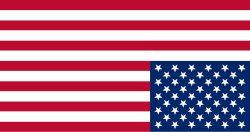
ABC pauses Kimmel after threats from Trump FCC
September 17
2025
Summary:
Chris Hayes focuses on what he frames as an accelerating Trump-era campaign to intimidate and control dissenting media, using Jimmy Kimmel’s show being “preempted indefinitely” after incorrect comments about the Charlie Kirk shooter as a case study in how political pressure can translate into corporate compliance. The discussion connects this episode to broader patterns of authoritarian media capture in Hungary, Turkey, and Russia, arguing that U.S. regulatory leverage (FCC licensing, merger approvals) and lawsuits are being weaponized to chill speech and reshape ownership toward pro-Trump allies. Guests Ben Rhodes and New York Times investigations editor David Enrich reinforce the theme that even isolated programming decisions send a wider warning to journalists and broadcasters, with Enrich emphasizing how litigation tactics hit smaller outlets especially hard. The tone is urgent and cautionary, highlighting the explicitness of FCC chair Brendan Carr’s threat—“We can do this the easy way or the hard way”—and later bringing on comedian Bassem Youssef to draw parallels with how strongmen target satire while Hayes stresses the difference between suspicion and fact.
00:52
Chris Hayes
Tonight on All In.
00:54
Donald Trump
Fallon has no talent.
00:56
Kimmel has no talent.
00:57
They're next.
00:58
They're going to be going.
00:58
I hear they're going to be going.
01:00
Chris Hayes
ABC announces Jimmy Kimmel is preempted indefinitely over comments regarding Charlie Kirk.
01:06
Then bombshell testimony against America's top public health official.
01:12
Soundbite
Did he ever communicate he was going to change the childhood vaccination schedule?
01:15
Chris Hayes
Not until that very day.
01:17
And as Jeffrey Epstein follows the president to England, the Epstein files take center stage in the House.
01:24
Donald Trump
Have you reviewed those 302 documents where the victims name the people who victimized them?
01:35
Chris Hayes
An All In starts right now.
01:41
Good evening from New York.
01:42
I'm Chris Hayes.
01:43
When Stephen Colbert announced that his late night show was being canceled back in July, the president of the United States, Donald Trump, had a chilling reaction.
01:52
Donald Trump
Fallon has no talent.
01:53
Kimmel has no talent.
01:55
They're next.
01:55
They're going to be going.
01:56
I hear they're going to be going.
01:57
I don't know, but I would imagine because they get, you know, Colbert has better ratings than Kimmel or Fallon.
02:03
You know that.
02:04
Chris Hayes
They're next.
02:05
I hear they're going to be going.
02:06
Well, tonight, an ABC spokesperson confirms that Jimmy Kimmel's late night show has been preempted indefinitely.
02:12
Now, it comes just hours after a large set of ABC affiliates announced they would refuse to air Kimmel's show.
02:18
They say because of comments the late night host made on Monday night relating to the motives of the man that shot and killed Charlie Kirk, wrongly suggesting the killer was part of the MAGA movement.
02:29
He was not.
02:30
Next star, the largest owner of local stations in the country, came out and said it, quote, strongly objects to recent comments made by Kimmel concerning the killing of Charlie Kirk and will replace the show with other programming in its ABC affiliated markets.
02:44
And if that were the whole story, he said something.
02:46
It was not correct.
02:48
The affiliates push back.
02:49
Well, then that would be one story.
02:51
But that, of course, is not the whole story.
02:52
OK, because crucially.
02:54
Just hours before that statement, Trump's handpicked FCC chairman went on a podcast and suggested ABC's broadcast license or affiliates could be at risk if they did not suspend or fire Kimmel, essentially issuing an order saying, and I quote him here, we can do this the easy way or the hard way.
03:15
Well, hours later, ABC made the announcement Kimmel would indeed be taken off the air indefinitely.
03:21
And this is just the latest chapter in Donald Trump's ongoing campaign to crack down on free speech, dominate the media and essentially render the First Amendment meaningless.
03:33
An extreme campaign that has been on overdrive the past week.
03:37
I mean, just yesterday, you had the deputy attorney general of the United States, the number two of the Department of Justice and the former criminal lawyer for the president, suggesting using criminal anti-racketeering laws, the kind of things used for mobsters, RICO statutes.
03:50
to go after and prosecute protesters who heckled Donald Trump at a restaurant, who yelled at him.
03:59
We're also getting new reports today.
04:00
The White House plans to target a variety of left-leaning groups and nonprofits in the coming weeks, all part of a larger and more dangerous effort underway.
04:08
And it follows a playbook we have seen successfully run in recent years by authoritarian strongmen in places like Hungary and Turkey and Russia.
04:17
Because in those places, they didn't just criminalize speech they didn't like, though some of them did some of that.
04:23
Crucially, they made it virtually impossible to see and hear examples of that speech by taking de facto control of the media landscape.
04:31
In Hungary, for example, the country's oldest newspaper was suddenly shuttered after being bought by a businessman with links to far-right President Viktor Orban.
04:39
According to Reporters Without Borders, Orban has used media buyouts by government-connected oligarchs to build a true media empire subject to his party's orders.
04:48
The group estimates such buyouts have given Orban's party control of some 80% of Hungary's media market resources.
04:56
It is a similar situation in Turkey, where, according to Reuters, the biggest media brands are controlled by companies and people close to longtime leader Recep Erdogan and his AK party following a series of acquisitions starting in 2008.
05:09
Then, of course, there's Russia, where oligarch friendly to President Vladimir Putin control much of the media.
05:15
Wartime restrictions have shut down the rest.
05:17
In each of these three countries, they didn't just arrest protesters or distant journalists or show up knocking on the door of magazines.
05:26
They used government power and sometimes through legal mechanisms to essentially roll up all of the country's media into a friendly propaganda arm of the regime.
05:40
So given that context, I want you to look around the U.S. right now.
05:43
and see what's been happening here right in front of our eyes.
05:46
In July, the Trump FCC, that's the entity that Brendan Carr controls, approved the sale of Paramount, with it, CBS, to Skydance Media, which is controlled by the family of pro-Trump tech billionaire named Larry Ellison.
06:00
It was his son, actually, who's buying it.
06:02
Now, that approval only came after Paramount paid Trump $60 million to settle the president's obvious, frivolous, ludicrous lawsuit against CBS News in 60 Minutes for editing interviews.
06:14
And after the Ellisons agreed to eliminate DEI programs and after they agreed to install an executive formerly from a conservative think tank to essentially act as a sort of ideological minder at CBS News for political bias.
06:26
So they did all those things.
06:28
Then they got the approval for this very, very large merger.
06:33
After that, CBS canceled Stephen Goldberg's top rated late night show, which was notorious for its criticism of the sitting president.
06:40
Last week, after Larry Allison officially leapfrogged another pro-Trump billionaire, Elon Musk, to become the world's richest man, the new Paramount conglomerate made another media bid, this time for Warner Brothers Discovery, which just so happens to own CNN.
06:58
So there's a possibility that they could purchase that and roll that up as well.
07:02
Then yesterday, we got this news about TikTok.
07:04
Perhaps you've seen it.
07:05
Do you remember the Chinese owned app that was banned as a security risk because of a bipartisan vote in both houses of Congress and signed to law by Joe Biden?
07:14
And then Donald Trump just literally ignored the law.
07:17
While he searched for U.S. buyer.
07:19
Well, yesterday there was news of a framework of a deal.
07:21
Interesting.
07:22
Let's see what the deal is.
07:23
Gives Americans an 80 percent stake in TikTok.
07:27
Which Americans?
07:27
Well, you'll never guess.
07:29
Yes, Larry Ellison is one of them, along with far right venture capitalist, Trump donor, Doge consultant, MAGA backer, Mark Andreessen.
07:38
As Talking Points Memo noted, if all those deals all go through, that would mean the Murdoch family controlling Fox News, the Journal of New York Post, its other properties, Twitter, TikTok, CBS, CNN, and more owned by Elon Musk and the Ellison family, the Washington Post owned by Jeff Bezos.
07:56
The Trump administration is threatening to bring the government down on free speech and use it against dissent.
08:02
It is also facilitating the sale on some of our biggest private media outlets to Trump allies and is a very obvious attempt to consolidate power over free expression.
08:13
Ben Rhodes served as Deputy National Security Advisor to President Barack Obama, author of After the Fall, The Rise of Authoritarianism in the World We've Made.
08:20
David Enrich is a New York Times deputy investigations editor and reporter, author of the much celebrated, well-reviewed Murder the Truth, Fear the First Amendment, and A Secret Campaign.
08:30
to protect the powerful.
08:31
They both join me now.
08:32
It's good to have you here.
08:33
Ben, let me just start with you.
08:34
I said this when Colbert was fired, that it's not too much of an overstatement to say the test of a free society is whether you live in a place where late-night comedians can be on TV making fun of the leader.
08:46
And I still feel that way, and today feels pretty bad on that score.
08:54
Ben Rhodes
No, it feels terrible.
08:55
And your leading was really good, Chris.
08:56
And frankly, my book that you just put up there goes into a lot of detail about these takeovers of the media.
09:02
And here's what I'd stress about it.
09:04
Some people see this and they think, well, you know, it's just one TV show.
09:08
It's just Stephen Colbert.
09:09
It's just Jimmy Kimmel.
09:10
It's just late night.
09:11
What you have to see it is a part of a concerted strategy where not only do you have pro-Trump oligarchs consolidating control of the media, but
09:19
And frankly, that's what they are.
09:21
I mean, if we're talking about Russia, if we're talking about Hungary, if we're talking about Turkey, you're talking about government-associated oligarchs, wealthy people with interests before the government, buying up the media because that's one way to retain favor with the leader.
09:34
But also really importantly, it's the example that is set.
09:38
It's not just about what Jimmy Kimmel or Stephen Colbert said.
09:41
It's the fact that they basically got axed for their speech.
09:45
That is a message to every other broadcaster on every other medium in this country that if you say something the leader doesn't like,
09:52
You're probably at risk of getting axed.
09:55
They want, Chris, people like you and me to be sitting here right now and have another voice in our head every time we open our mouths that if we say the wrong thing, that might be it for us, too.
10:05
Right.
10:06
This is not just cancel culture.
10:07
It's way beyond that.
10:09
It's trying to enforce essentially an ideological test on the broad spectrum.
10:13
based news media that reaches the vast majority of Americans so that the only content they're seeing is essentially ideologically aligned with whatever Trump and his FCC director and a small group of people around him think.
10:27
That's what's happening.
10:28
And we're pretty advanced.
10:29
The only other thing I'd say, Chris, is we're pretty far along on this thing.
10:32
Right.
10:33
Like like it took Putin a while.
10:35
to do this.
10:36
It took Orban a while to do this.
10:38
I think maybe because we're actually going to think of this as we're in year nine of the Trump era, like he had one term to see what the landscape was like.
10:45
He had four years out of power to consider what he'd do if he'd get back.
10:48
They studied what Orban did.
10:50
They studied what Erdogan did, what Putin did.
10:53
There's one playbook that has been pursued everywhere.
10:55
And I think what Americans need to realize, we're not at the beginning of the playbook, Chris.
10:59
We're near the end of the playbook.
11:02
Chris Hayes
you covered that Paramount merger.
11:04
And what's striking to me here is, you know, you've got this kind of, there's a little bit of a wink, wink, nudge, nudge, or what can be implicit, what's said behind closed doors.
11:13
In this case, right, the company that owns a lot of these local affiliates, Nexstar, they have a big acquisition that needs approval by the FCC.
11:23
They're trying to buy Tegna.
11:25
And they also are lobbying explicitly
11:29
for the Trump administration to basically deregulate local ownership rules.
11:34
David Enrich
And not only that, but ABC, which is owned by Disney, has seen such an interest in making peace with the Trump administration for its own corporate interests that they bent over backwards to settle what most experts regarded as a very weak defamation case that was brought against ABC last year.
11:51
And so you have this combination of factors where you have big companies that are desperate to make peace and afraid of incurring the wrath of the Trump administration.
12:02
And you have an administration and a president that are more willing than probably any others in U.S. history to use the immense power of the federal government to enforce purity and to really shut down dissenting voices.
12:16
And we're seeing this accelerating at what to me is a very surprising pace.
12:22
Chris Hayes
Yeah, I mean, this is just what's striking here is how explicit it all is.
12:26
So I want to just, you know, so Nexstar needs this approval.
12:29
Right.
12:29
So here's Brendan Carter reacting.
12:31
I want to thank Nexstar for doing the right thing.
12:34
Local broadcasters have an obligation to serve the public interest.
12:37
While this may be an unprecedented decision, which is interesting and important for broadcasters to push back on Disney programming that they determine falls short of community values, I hope other broadcasters follow Nexstar's lead.
12:48
And then I want to play this for you.
12:50
But so that's that's what he says afterwards.
12:51
I want to play just so people hear the flavor of this car today with his explicit threat that seems to be the precipitating incident talking about doing it the easy way or the hard way.
13:02
Take a listen.
13:04
Brendan Carr
We can do this the easy way or the hard way.
13:06
These companies can find ways to change conduct, to take action, frankly, on Kimmel, or there's going to be additional work for the FCC ahead.
13:17
There's calls for Kimmel to be fired.
13:20
I think you could certainly see a path forward for suspension over this.
13:26
And again, the FCC is going to have remedies that we could look at
13:30
Chris Hayes
I mean, Ben, that's about as explicit a threat as I've ever seen in the time that I've covered politics and media.
13:39
Ben Rhodes
Yeah.
13:39
And look, the FCC is usually a relatively kind of neutral, nonpartisan administrative agency, you know.
13:46
And the reality is that's kind of mob language, right?
13:49
Like when it's the easy way or the hard way.
13:52
But underneath it, right, is that they're using all their different powers, right?
13:55
They're using the power of licensing.
13:58
which is in the government sense, that's something that we've again seen in other countries that have been done to weaponize use of licensing.
14:04
We've seen essentially these wink wink use of antitrust approvals.
14:10
Right.
14:10
So you can't have your consolidation big tech company that wants to buy media property or have a merger.
14:17
You can't get our approval unless you pass our ideological purity tests and hurdles.
14:23
And then they kind of demonstrate that they're willing to do that.
14:25
And then you have this effort to make an example of somebody so that the message is out to all of these other media companies that essentially if you have something on air that we don't like, this could complicate your interest with us.
14:39
So you better make an example of somebody.
14:40
And I just want to stress here what Jimmy Kimmel said, like it may have been wrong, it may have been incorrect, it may have even been offensive to somebody.
14:46
But that's not a reason to cancel someone's entire show.
14:50
If it was, think about how many wrong things are said all the time that have to be corrected in the media.
14:55
Think of the things that comedians say, like you say, Chris, comedians push the envelope.
14:59
Sometimes they go over the line.
15:01
That's part of being a comedian.
15:02
It's the right.
15:03
They usually insist upon free speech in that regard.
15:05
Imagine the things that are said on Fox News every day that are that are mean or wrong.
15:10
We're not certainly going to be pulling their license.
15:12
It's about making an example of somebody so that every corporate overlord of every major media company in this country knows.
15:19
Well, I better have an internal set of discussions here that we're not going to go in certain places on our programming because we have these other economic interests before the government.
15:29
Look, the net results of all that is that essentially you don't need to have literally propaganda networks.
15:36
You don't need to be North Korea.
15:37
You don't have to have government people writing scripts.
15:40
This is much more like, you know, softer autocracy, but it has the same net results in the sense that everybody knows now that you don't cross certain lines and you certainly don't cross Donald Trump's interests or else the hammer could come down on you.
15:55
And that's what was explicitly said.
15:57
The easy way or the hard way.
15:58
The easy way, according to that threat, is just just fall into line.
16:02
Just do what we want or just sell the property to a pro-Trump oligarch who we know is going to enforce an ideological purity test.
16:09
The hard way is, you know, yeah, we'll start yanking your license.
16:12
We'll not approve a sale or a merger.
16:15
But this is all happening before our eyes.
16:18
Chris Hayes
The other sort of avenue they've used, David, you chronicle some of this in the book, specifically around lawsuits and this sort of pre-existing, really dangerous sort of transformation that's happening in the law.
16:29
But it's along with the official state power.
16:31
Then you have Donald Trump as litigant.
16:33
Yeah.
16:33
Suing the paper that you work for, the New York Times, just the other day for billions and billions of dollars.
16:38
He's suing Rupert Murdoch, which, again, these are facially ludicrous lawsuits.
16:43
I think particularly the New York Times one.
16:44
That's just my commentary.
16:45
You don't have to comment on it.
16:48
But it does create costs.
16:50
David Enrich
Huge costs.
16:51
And it's huge costs for a place like the New York Times or the Wall Street Journal that have the lawyers and the resources and the expertise to fight hard.
16:59
But this is a strategy that is playing out across the U.S. media landscape right now.
17:03
And it often is affecting places and individual journalists who simply don't have those resources.
17:08
And so I think one of the concerning things to me right now is that you're seeing these tactics at the national level coming from the White House and coming from President Trump.
17:16
there's a pattern in this country of those tactics kind of rolling downhill and starting to really affect the free speech all over the country in places you would not quite expect it.
17:25
And so I think this is the beginning of a really problematic trend where the weaponization of libel law and basically of the federal government's powers is starting to be used really in a very highly political way to enforce speech that or discourage speech that is out of favor.
17:45
Chris Hayes
David Enrich and Ben Rhodes.
17:46
Thank you.
17:47
Appreciate it.
17:48
Coming up, much more on the Trump administration, ABC's decision to pull The Jimmy Kimmel Show next.
17:56
Late night television shows and hosts, comedians, people who satirize politicians and the powerful in mass media are sort of uniformly exactly the type of people who threaten strongmen.
18:06
In fact, that's what Bassem Youssef did in Egypt starting in 2011 when his show Al-Bernamig, or The Program, mocked then-Egyptian President Mohamed Morsi in 2013.
18:17
Youssef was arrested, eventually forced to flee the country.
18:20
And joining me now is comedian Basim Youssef, who is on tour now.
18:25
Basim, it's great to have you on.
18:26
I thought of you obviously immediately when the news happened.
18:29
I thought of it when Stephen Colbert happened.
18:31
And I'm as a late night comedian who found themselves on the wrong side of the government for their satire and mocking your reaction to the news about Jimmy Kimmel today.
18:43
Soundbite
Well, welcome to my world.
18:45
I'm happy that every time, I'm not happy, but I find it interesting that every time you find someone canceled, people think about calling me first one.
18:53
It's your calling card, yeah.
18:55
Yeah, I have.
18:56
I have like I do like a mini show on my social media now.
18:59
And I always started with my fellow American citizens.
19:02
And I basically I'm I'm I'm telling them we are time travelers because we come from our past to tell you about your future and that your future is unraveling in front of your eyes right now.
19:15
And yeah, it's.
19:16
But I heard your introduction, and I just want to point out that, first of all, what happened to, I'm a big fan of Jimmy Kimmel and Stephen Colbert.
19:27
I've met both of them, lovely people.
19:29
And what happened to them, of course, is wrong.
19:31
But I think we are under the illusion that there is free speech in this country.
19:36
There is, of course, like compared to other countries.
19:38
It's amazing, wonderful.
19:40
But when push comes to shove,
19:43
actions happen.
19:45
You mentioned the Larry Ellison TikTok deal, but I would like to add that the TikTok thing started two years ago and it didn't have anything to do with Trump or the right wing, because we all heard this leaked phone call by the president of the ADL, the Anti-Defamation League, who said, like, we don't have a right problem or a left problem.
20:05
We have a TikTok problem.
20:07
And sure, because TikTok was known to spread
20:10
news about what's really happening in Gaza, what's happening in Palestine.
20:13
And it was taken down by the government just for that.
20:17
And just a few weeks ago, they announced that they have an ex-IDF soldier to look over the algorithm to even damp the pro-Palestinian voices.
20:26
So we have been actually shouting
20:29
for about this for two years there are people that had their visa revoked their green card revoked there are people that been doxxed they lost their jobs they lost their livelihood i mean uh kimmel and colbert bless their heart but they will survive there are people who completely lost their their lives just because they tweeted or they demonstrated about why we americans our
20:52
tax money is going to fund that genocide.
20:55
So it's not new.
20:56
And for me, I don't want to fall into this right and left bullshit.
21:03
Excuse my language.
21:04
It is the right and left because I see the right and left tearing each other apart about abortion, guns right, immigration, border, health care.
21:12
But they always come together together.
21:15
And they support one thing, which is our unraveling, unbending support to Israel, even if that meant that all of our infrastructure, our roads, our health care, are destroyed and falling apart while we are financing the lifestyle of more than a million settlers in the occupied West Bank.
21:33
And they're living off our money.
21:35
And nobody is talking about that.
21:38
Wait a second.
21:40
Chris Hayes
But people do talk about it.
21:41
I mean, I just think...
21:43
Of course they do.
21:44
I mean, the idea that that is not a thing that is discussed in American discourse strikes me as insane.
21:50
Like, it's probably the number one, one of the top issues in American discourse.
21:55
Soundbite
It's discussed mostly online.
21:56
I'll give you an example.
21:58
How much have you heard about Epstein, Epstein, Epstein and Trump, Epstein and Trump in all of these comedy shows?
22:04
How many of those people talked about Epstein relationship with Mossad, with Ehud Barak and how Israel is informed?
22:10
You don't know about that.
22:12
There is a limit.
22:13
Chris Hayes
First of all, wait a second.
22:17
Soundbite
Wait a second.
22:18
Chris Hayes
I just want to be clear.
22:19
we got to stay on the facts here, right?
22:21
And this is an important part of all this, right?
22:23
He had a relationship with Ehud Barak that's established.
22:25
He had a relationship with Ehud Omar.
22:27
Him being associated with Mossad is not established.
22:31
That's just not.
22:33
It's not an actually established fact, right?
22:35
So, like, part of the thing here on all discourse is, wait, whether free speech or not, wait a second.
22:41
Let me finish this point.
22:42
Whether free speech or not, right?
22:43
Like, part of the thing about all this is that all actors who have platforms
22:48
in a society in which you have free speech also do have a responsibility to make sure they're getting things correct precisely.
22:56
Soundbite
Well, I think when you have the head of the FBI...
22:59
Yes, but when you have the FBI openly say that Americans need to wake up and prioritize Israel, and when there are like glowing evidence of how Israel is involved and all of the connection with Lex Wexler and all of those people, and it is bright a day that there is a connection, there is at least suspicion to start talking.
23:22
People have started investigative reporting about stuff that are less clear than this.
23:27
Chris Hayes
But I just want to say this clear as day.
23:30
Suspicions are not fact.
23:31
And that distinction is actually really important.
23:33
It strikes me in the work that you do, the work that I do, the work that anyone does about what we do know and what we don't know.
23:40
In fact, that's I think the issue here that I think Jimmy Kimmel has a perfectly good grounds to apologize for their ground to sanction, which is he got something wrong.
23:49
But getting something wrong shouldn't be a crime.
23:51
What did he get wrong?
23:53
He said that he was from, he essentially suggested that the shooter was part of MAGA, but that appears to be not true.
23:59
Soundbite
Even if that, that's first of all, that's not a ground to actually to kick anybody off the air, because we still we just had like a Fox News guy on on air saying that we should give lethal injection to homeless people.
24:11
And that guy still keeps his job.
24:13
So I don't really understand.
24:14
I mean, I agree.
24:16
I agree that the selective rage.
24:19
Chris Hayes
Yes, it is definitely selective.
24:21
There is no question about that.
24:22
Bassem Youssef, who knows from selective rage.
24:24
Thank you for your time.