
War games help identify potential vulnerabilities and how they might be exploited. Democrats need to do that with the November elections
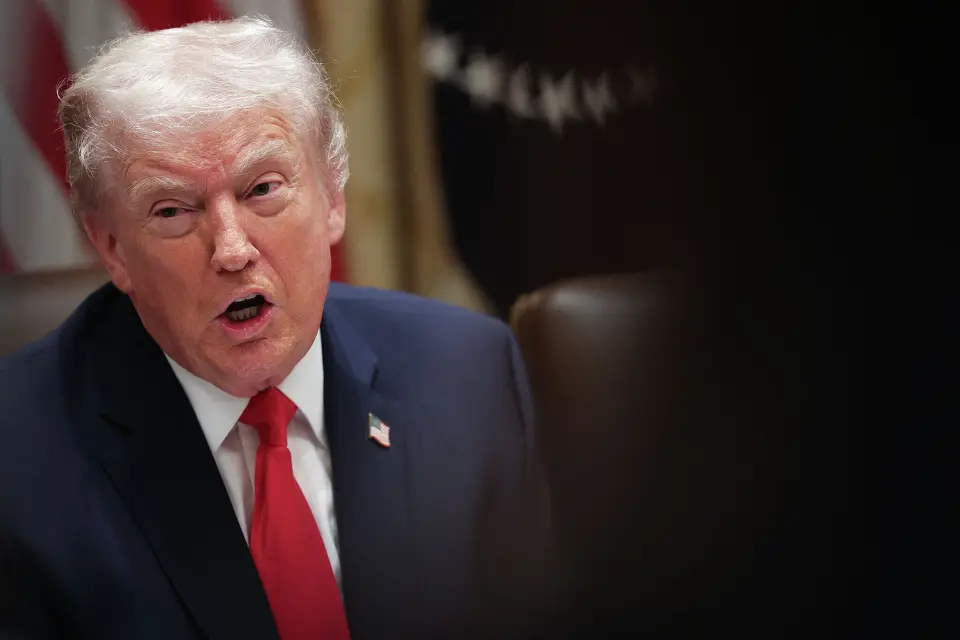
U.S. President Donald Trump attends a cabinet meeting at the White House on Thursday. Trump’s words and actions seem to fit a playbook for disrupting an election. Win McNamee/Getty Images
As a researcher and national security specialist for the Center for Strategic and International Studies during the 1990s, I worked alongside everyone from former Secretary of State Henry Kissinger to former National Security Adviser Zbig Brzezinski, to the most interesting person I’ve ever met: military war-gamer Col. Bill Taylor, who, in addition to famously serving as Sgt. Elvis Presley’s Army platoon leader, held the dubious distinction of being the only American ever invited to the “personal pleasure dome” of North Korean dictator Kim Il Sung.
I also worked on some of the most cutting-edge war-gaming simulations, including “ Wild Atom ” — a two-day simulation with multiple real-human players, involving a possible plot to smuggle nuclear materials capable of making a bomb into the U.S. ahead of a potential terrorist attack. Hints that Moscow might be involved entered the mix, and players ultimately had to read intelligence signs to learn how to avoid nuclear war.
Recently, I’ve been doing this same work in my head over what’s happening in Minnesota.
The first thing to do to game out any scenario is to identify your opponent’s raison d’être, what makes them tick, what they’re after. I humbly suggest President Donald Trump is singularly focused on the midterms, and so that’s where the focus should be.
Think about it: Trump announced during the presidential campaign that, if he won the 2024 election, it would be our last. “You won’t have to vote anymore,” he told one conservative Christian audience. Implying, some believe, he has no intention of ever leaving office.
Now back in the Oval Office, he has operationalized an opulent new Air Force One given to him by the Qatari royal family to match his personal tastes, while simultaneously breaking ground on a humongous new Grand Ballroom for himself where the East Wing used to be — each at a projected cost of over $400 million, and neither likely to be ready until the back end of his term.
Does that sound like a man who’s planning to step down?
Trump’s game plan, so far, has been plain for all to see: Send armed federal immigration agents into blue cities to incite civil unrest, blame state or local Democratic officials — whoever’s convenient — for the unrest, send in the National Guard to incite more civil unrest and then send in active-duty military.
Rinse/repeat.
If a court rules against him, simply switch out the legal rationale and either keep ratcheting it up in that city or move on to the next.
Gaming this out, it appears everything Trump is doing is part of a plan to steal or upend the midterms.
In Minneapolis, Trump appears poised, recent public relations setbacks be damned, to take it to the next level. First, Trump accused the mayor and Minnesota’s governor of inciting the violence he himself incited, and then accused them of insurrection. He simultaneously put on standby 1,500 combat-ready soldiers currently stationed in Alaska, with considerable experience in arctic conditions. This perfectly matches the speech he gave in September, telling a room of our 800-plus generals and admirals to ready themselves for warfare in America’s blue cities. Even as he appeared to pull back the aggression in Minneapolis by hauling operations commander Gregory Bovino back to California, Trump tasked Defense Secretary Pete Hegseth to begin preparing Fort Snelling, the nearest military base, for a surge.
Meanwhile, Homeland Security Secretary Kristi Noem is trying to leverage the Trump administration’s brute show of force in Minneapolis to shake down the state of Minnesota for its voter files.
Why would she do that?
Perhaps, because the Trump administration has already tested out the process at the Social Security Administration of declaring living people dead in large numbers when it suits their purposes. Perhaps, they’re considering operationalizing those voter rolls to declare certain voters dead in the days leading up to the election.
This is just one example of the type of threats war gaming models are designed to identify. And while it might sound conspiratorial, Trump’s FBI just executed a search warrant at the election office in Fulton County, Georgia — where Trump spuriously claimed voter fraud cost him the state in 2020. Just the latest example of an administration so hellbent on getting its hands on America’s voter files that it’s suing more than 20 states for refusing to hand them over.
With this in mind, blue states should redouble their efforts to secure their voter rolls and voting machines, before and after the election, and to be on the lookout on Election Day for the “living dead.”
The U.S. Postal Service has also recently adopted policies consistent with the president’s desire to abolish mail-in voting by changing the way it date-stamps mail-in ballots, rendering useless a state’s ability to determine if a mail-in ballot has been legally cast. Forcing, in effect, in-person voting, unless states can figure out a way around this.
When an election is determined only by votes cast in person, the potential for mayhem is off the charts. Armed troops in the streets, federal immigration agents harassing people in voting lines or entering voting sites under the pretense of ferreting out the undocumented people they’ve long claimed are voting. A few opportune gunshots in the air should be enough to scatter voters, presumably in blue precincts, waiting in line to cast their votes. Images, such as these, televised for all to see, could also have the chilling effect of discouraging people from showing up at all.
Brett Wagner